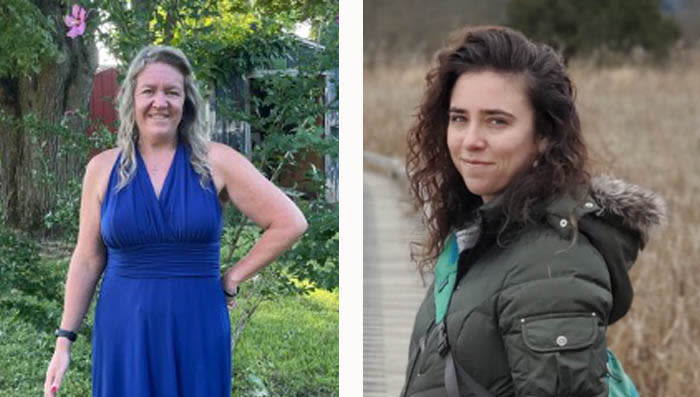
When did you begin working at Ozone House?
Danielle - It's been lots of experiences throughout my life. I volunteered at Ozone House as a crisis line volunteer in 2005 and just had different experiences through housing, homelessness, and with individuals with mental illness. An opportunity came about two years ago for me to come back to where it all started, put my experiences together, and serve young people at Ozone House.
Samantha - For the last six-ish years, I was living in British Columbia and looking for an opportunity to come back home (Michigan) and be closer to family. I was trying to be very intentional about where I was looking. I was able to find Ozone House. I had already worked with at-risk individuals in various capacities, and this felt like it brought that knowledge together and focused on the homelessness piece that my other programs hadn't had previously.
Tell me about programming at The Ozone House?
Danielle - What we really pride ourselves on at Ozone House is a full spectrum of services for youth and young adults, from prevention and early crisis intervention services to longer-term housing. Our services fall into three separate buckets: education, outreach, and welcoming. That is our crisis line, drop-in center, intake, community outreach, and awareness. We provide case management, different rapid rehousing, permanent supportive housing programs, voucher programs, sex training, and housing subsidies that help young people receive access and increase their independence before they move out on their own.
How do you figure out a child’s need for each situation?
Samantha - Where I would start is asking the young person, what do you need? What do you want? What is your goal right now? They could benefit from therapists. They could benefit from community connections. They could benefit from going to school. And they might say, "I'm trying to get food stamps so I can eat and then settle myself." So my goals do not matter at that point. There could be a million answers to the question. Where I start is asking my case managers to sit with a young person and say, “Where are you at?”, “What are your goals for yourself?”, and normally, some paths start to kind of open up from there.
How do you guys keep in contact with the youth after they leave Ozone House?
Danielle - There are varying levels for people to stay in contact with Ozone House because it was of value to them. One of our board members was involved with Ozone House as a young person. We have situations like that, where people come back later in life. There are also program requirements we have to follow up on for about a year after people's cases have been closed. We gather feedback through our Youth Advisory Board.
Talk about the LGBTQ component of Ozone House. On your website it said LGBTQ youth are at a higher risk than their peers for bullying, violence and discrimination, with up to 40% of the youth facing homelessness.
Samantha - From Ozone’s inception, they saw that, historically, it was happening. Where that conditional love is going on at home, “we will love you if you are the way that I expect you to be, and if you happen to fall on the spectrum, then you are not welcome here.” And so it was presented to young people, oftentimes as a choice, and it is hard to choose between your own identity and love. That is often what brings a young person to Ozone House, where those first services provide a safe space, at the bare minimum, you are allowed to be yourself.
Can you talk to me about the overall impact that you've had in the Washtenaw area?
Danielle - Some impacts are measurable, and some are more organic. Part of our impact is just in our reach. Through our crisis line, street outreach events, and community events, we reach around 3,000 young people each year. I think that is one piece of impact. Anytime somebody can get their crisis line call answered, anytime somebody is struck, stops into the drop-in center, and can get a meal and be safe instead of outside getting in trouble on the streets; those are layered impacts.
Is there anything else you want to put out there to the world?
Samantha - Young people's homeless journey looks very different once you're an adult. There are stigmas, judgments, and preconceived notions when it comes to homelessness in general, but especially with young people. People need safe, consistent support in their lives. It's not a judgment in the community; it's that everyone is on their own journey. These are beautiful, capable individuals who are the reason I do this work; they give me hope for the future. And so to remind ourselves that they're people too, and this is just a part of their journey.
Visit their website to learn more about Ozone House.