Cannabis History in Ann Arbor, MI
From Protest to Policy
Ann Arbor has a long and storied history with cannabis, full of colorful characters and renowned activists. Before cannabis legalization made national headlines, Ann Arbor was already having the conversation. In fact, the city’s relationship with cannabis dates back to the 1960s, an era when free speech, big ideas, and a little rebellion were all part of the local flavor.
By the late ’60s and early ’70s, Ann Arbor had become a gathering place for activists, artists, students, and changemakers. The vibe? Question everything. Stand up for what you believe in. And maybe do it on the U-M Diag. That spirit didn’t just shape campus culture, it helped influence Michigan’s, and eventually the nation’s, approach to cannabis policy.
Ann Arbor became shorthand for progressive cannabis policy long before statewide legalization was on ever the table.
Cannabis Timeline
-
As the University of Michigan campus buzzed with activism, free speech movements, and anti-war protests, Ann Arbor became a gathering place for big ideas and bold voices. Cannabis reform conversations were already part of the broader cultural shift happening here.
-
Poet and activist John Sinclair was sentenced to 10 years in prison for possession of two joints of marijuana. The severity of the sentence sparked outrage locally and nationally, energizing reform advocates.
-
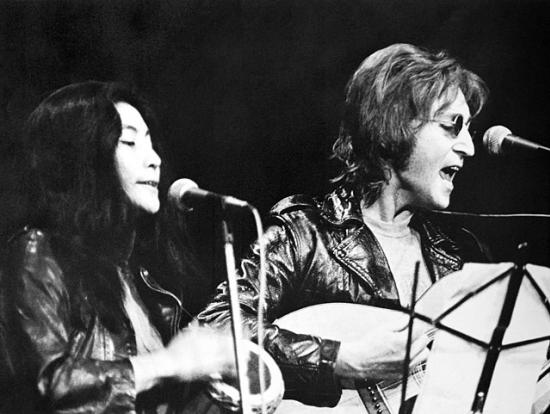
More than 15,000 people gathered at the University of Michigan's Crisler Arena for a high-profile concert and protest featuring John Lennon, Yoko Ono, Stevie Wonder, Allen Ginsberg, Bob Seger, and others. Lennon debuted his song “John Sinclair” live that night. Just days later, John Sinclair was released after the Michigan Supreme Court ruled the state’s marijuana laws unconstitutional. More information about John Sinclair Freedom Rally below.
-
In response to Sinclair’s sentencing, activists organized the first Hash Bash on the University of Michigan Diag on April 1, 1972. What began as a protest quickly became an annual rally advocating for marijuana law reform, civil liberties, and personal freedom. It still happens the first Saturday in April.
-
Just two years after the first Hash Bash, Ann Arbor became one of the first cities in the United States to decriminalize marijuana possession, replacing potential jail time with a small civil fine of only $5. It was one of the most lenient local penalties in the country at the time and made national headlines. The move positioned the city as a national leader in cannabis reform.
-
Graham Nash’s song “Prison Song,” released on his 1974 album Wild Tales, calls out Ann Arbor by name, using its marijuana laws as a point of contrast in the chorus.
Kids in Texas smoking grass,
Ten year sentence comes to pass
Misdemeanor in Ann Arbor,
Ask the judges why? -
For decades, Ann Arbor maintained some of the most relaxed marijuana enforcement policies in the country, reinforcing its reputation as a place willing to challenge norms and lead with policy innovation. Even when state-level laws stiffened penalties, Ann Arbor maintained its own ordinance, reinforcing its identity as a place where local governance carries weight.
-
Michigan voters approved medical marijuana statewide in 2008. Ann Arbor, already familiar with progressive cannabis policies, became home to some of the state’s earliest cannabis dispensaries.
-
Michigan voters approved adult-use recreational cannabis. Ann Arbor quickly began establishing regulations and welcoming licensed dispensaries.
-
Today, licensed retail shops are abundant, operating within carefully regulated frameworks that reflect both state law and local oversight. Inside, the vibe is less underground and more educational, knowledgeable staff, clearly labeled products, thoughtful spaces designed to feel welcoming rather than hidden. It’s a visible shift from counterculture to commerce, but not a loss of character.
When Music Made History
John Sinclair Freedom Rally
As far back as 1967, the Michigan Daily, the University of Michigan student newspaper, called for the plant's legalization. But it was the arrest and imprisonment of poet John Sinclair —for possession of two joints—that set Ann Arbor on the trajectory as Michigan’s (and perhaps the country’s) most pioneering cannabis community.
Sinclair Arrested, Protest Concert Planned
Sinclair, a poet, writer, and activist from Flint, was arrested for marijuana possession in January 1966 and was subsequently sentenced to ten years in prison in July 1969. A few years into his sentence, activist Abbie Hoffman and poet Allan Ginsberg organized a “Free John Sinclair” rally at the University of Michigan’s Crisler Arena. They pulled in talented friends to the December 1971 event—John Lennon and Yoko Ono, and Michiganders Stevie Wonder and Bob Seger as well as other notable musicians including the Ann Arbor-based band Commander Cody. The Black Panthers provided security for the event. That night, in the act of civil disobedience thousands of people freely smoked weed in the packed arena while listening to the speakers and musicians.
Sinclair Released
The protest was effective, and the Michigan Supreme Court freed Sinclair just three days after the rally. Justices ruled that the state's marijuana statutes were unconstitutional. Shortly thereafter the issue of making cannabis possession a civil infraction came before the Ann Arbor City Council. Two new members from the Human Rights Party successfully proposed that the City penalty for possessing less than two ounces of marijuana be a $5 civil infraction ticket. While some political tussling took place in the years that followed, the law remained on the books and was placed into the City’s charter by a public vote in 1974. Nearby Ypsilanti followed suit with a similar law.
Hash Bash Begins
The rally for John Sinclair quickly morphed into the Hash Bash. The first Hash Bash event was held on April 1, 1972 and was protest-focused. Over the years, the Hash Bash continues to be held on the first Saturday of April on the Diag of the University of Michigan, where various activists and notable political figures take the mic.
The Story Continues
In many ways, this timeline mirrors the city itself. Ann Arbor has always been comfortable holding multiple identities at once, academic and artistic, entrepreneurial and idealistic, historic and forward-looking. Cannabis here followed that same arc: from protest to policy, from fringe to framework.
The storefronts may be new, but the spirit feels familiar, rooted in free expression, civic engagement, and a community that believes change happens when people show up, speak up, and shape their own future.